Stage and Cultural Programme Sponsorship at Indian Festivals
The only festival unit that buys you a seated audience and a public announcement. Backdrop rates, title sponsorship, what to negotiate beyond the banner, and why it works differently from every other placement.
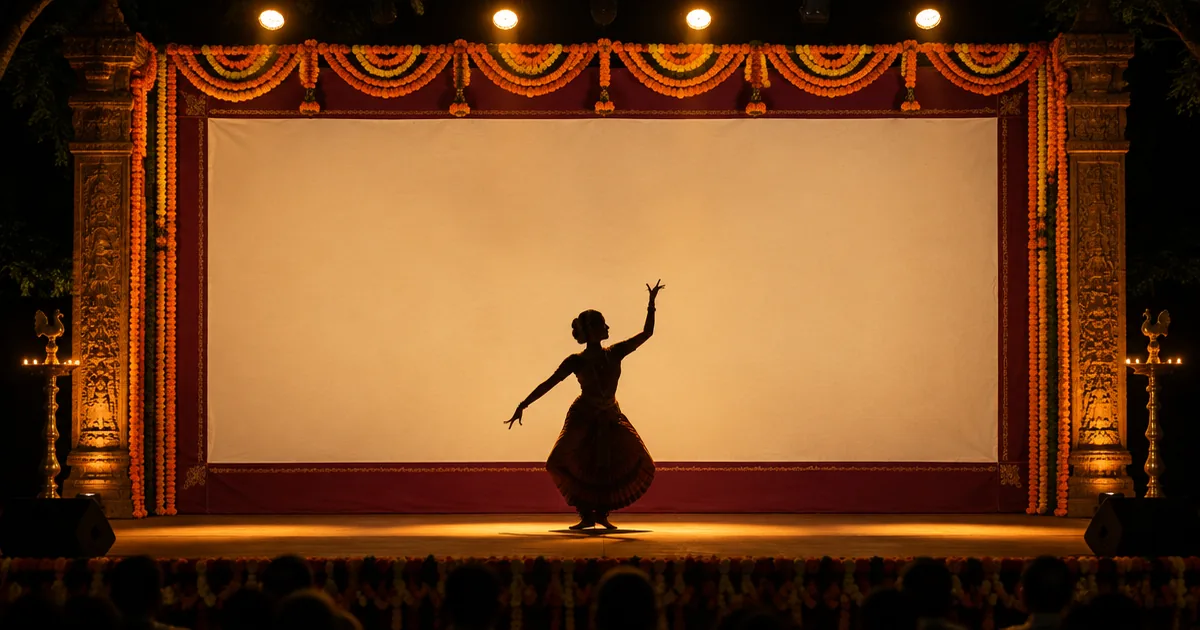
Most festival inventory is passive. You buy a surface, people walk past it.
Stage sponsorship is the exception. It buys you a seated audience, a named association with a programme, and — the part brands consistently undervalue — a human being saying your brand name aloud to a crowd, repeatedly, over several evenings.
That is closer to broadcast sponsorship than to outdoor advertising, and it should be evaluated that way.
What gets sponsored
Almost every puja and mandal runs a cultural programme: music, dance, recitation, competitions, prize distributions, sometimes a local celebrity evening. The sponsorable assets are:
- The stage backdrop — the printed panel behind the performers, visible in every photograph and every video anybody shoots
- Title sponsorship — the programme carries your name. "The [Brand] Sangeet Sandhya."
- Announcement rights — the compere thanks you by name, at set intervals, on a script you have seen
- Prize sponsorship — you supply or fund the prizes and present them
- Side panels, wings and podium branding
- Segment sponsorship — one competition or one evening rather than the whole programme
The backdrop is the unit most commonly listed. It is rarely the most valuable one.
Why the stage behaves differently
Seated, attentive, for a long time. A cultural evening runs two to four hours. A visitor at a pandal gate is present for seconds; a parent watching their child compete is present all evening, facing your backdrop the entire time. Dwell time here is not comparable to any other unit.
Repeated verbal mention. A compere naming your brand between items delivers something no printed surface can. Over a four evening programme with mentions every fifteen minutes, that is well over fifty audible brand mentions to a captive audience. This is the asset to negotiate hardest for, and it usually costs nothing extra because committees do not think to price it.
Every photograph contains your backdrop. Performers photographed on stage, prize winners, the committee's own social media, the local paper if it covers the programme. Your backdrop is in all of it.
Emotional peak. Prize giving for a children's competition is the highest emotion moment of the entire festival for the families present. A brand handing over that prize is remembered in a way a banner is not.
What it costs
| Asset | Typical arrangement | Indicative price | |---|---|---| | Stage backdrop, shared | Logo among several | ₹3,000 – ₹15,000 | | Stage backdrop, sole | Full panel, your design | ₹15,000 – ₹60,000 | | Programme title sponsorship | Name in the programme title, announcements, backdrop | ₹25,000 – ₹2,00,000 | | Single evening or segment | One competition or one night | ₹5,000 – ₹30,000 | | Prize sponsorship | Cost of prizes plus presentation rights | often prizes only |
Prize sponsorship is the most underpriced asset in Indian festival advertising. Funding ₹8,000 of prizes for a children's drawing competition frequently buys you the announcement, the presentation photograph, the backdrop mention and the goodwill of forty families — for less than a shared banner costs. If your budget is small and your market is local, start here.
What to negotiate beyond the banner
Committees will quote you for a backdrop because that is what they have always sold. The value is in the things they have not thought to charge for. Ask for all of these and expect to get most:
- A written announcement script and a minimum number of mentions per evening. Vague goodwill produces vague results.
- Your name in the programme title, on the printed schedule, and in the committee's WhatsApp and social posts.
- Presentation rights for at least one prize, with somebody from your company on stage.
- Photographs and video from each evening, delivered to you, with usage rights for your own marketing. This is your content for the next twelve months.
- A two minute slot between items, if you have anything worth two minutes. Usually you do not — a thirty second thank you from a real person beats a corporate film every time.
- First refusal for next year, in writing. Stage sponsorship compounds; the audience is largely the same families annually.
Creative that works on a stage backdrop
- Design for photography, not for reading. The backdrop's main job is being the background of hundreds of photographs. Your logo should be legible in a phone photo taken from twenty metres in poor light.
- Keep the centre clear. Performers stand in the middle. Brand the upper band and the flanks; anything centred is permanently obscured.
- Respect the occasion. A backdrop that looks like a hoarding cheapens the programme and the committee will resent it. Festival appropriate design, your brand present but not shouting, works better for you as well.
- Never place branding above or beside the deity. If the stage shares a frame with the idol, keep all commercial content clearly separate. Committees will refuse otherwise, and they are right to.
- Large format, low resolution is fine. 72 dpi at full size, CMYK, 3 inch bleed, fonts outlined.
The catch
Two honest limitations.
The audience is smaller than the footfall. A pandal drawing 20,000 visitors may seat 300 at the cultural programme. You are buying depth, not reach. If your objective is impressions, buy a gate instead.
Delivery is the least reliable of any festival unit. A printed banner either went up or it did not, and a photograph settles it. Announcement counts, title usage and prize presentations depend on a volunteer compere remembering on a chaotic evening. Put the specifics in writing, and require video from each evening rather than photographs — that is the only proof that captures a verbal mention. Our proof of display standard covers what to require.
Who should buy it
Strong fit: local and regional brands where community standing is the point — banks, hospitals, schools and coaching centres, jewellers, real estate, automobile dealerships. Anyone selling something that requires trust.
Poor fit: brands wanting maximum impressions per rupee; anyone unable to send a person to attend; national brands with no local presence to convert the goodwill into anything.
Frequently asked questions
How much does stage sponsorship at a puja cost?
A shared backdrop commonly runs ₹3,000 to ₹15,000 and a sole backdrop ₹15,000 to ₹60,000. Full programme title sponsorship ranges from about ₹25,000 at a neighbourhood puja to ₹2,00,000 at a large one. Prizes for a single competition often cost less than a banner.
What is title sponsorship of a cultural programme?
Your brand name becomes part of the programme's name, appears on the backdrop and printed schedule, and is announced by the compere throughout. It is the most complete form of stage association.
Is stage sponsorship better than a gate?
They buy different things. A gate delivers reach to everyone who enters. A stage delivers depth — a seated audience, verbal mentions and an emotional moment — to a much smaller group. Choose by objective, not price.
How do I prove the announcements actually happened?
Require video from each evening rather than photographs. A still image cannot evidence a verbal mention. Agree the announcement script and minimum mentions per evening in writing before paying.
Can my brand appear near the deity?
Keep all commercial branding clearly separate from the idol. Most committees will refuse otherwise, and placing a logo beside a deity generally causes offence rather than goodwill.
What is the cheapest way into stage sponsorship?
Fund the prizes for one competition. It frequently secures announcement, presentation rights and a backdrop mention for less than a shared banner, and it is the version families remember.
The short version
The stage is where a festival sponsor stops being a logo and becomes a name people hear. The backdrop is what committees sell; the announcements, the title and the prize presentation are what is actually worth having, and they are usually available for the asking. Get the specifics in writing and require video, because this is the unit where delivery slips most.
**Browse pandals with stage positions available**
Related: [Gate and arch branding](/blog/festival-gate-arch-branding-guide) · [Sponsorship proposal template](/blog/durga-puja-sponsorship-proposal-template) · [More guides for brands](/blog/category/for-brands-advertisers)
PujaSathi is a product of Tracetex 360 Innovations (OPC) Private Limited. Prices quoted are indicative ranges observed on listed pandals; each committee sets its own rates.