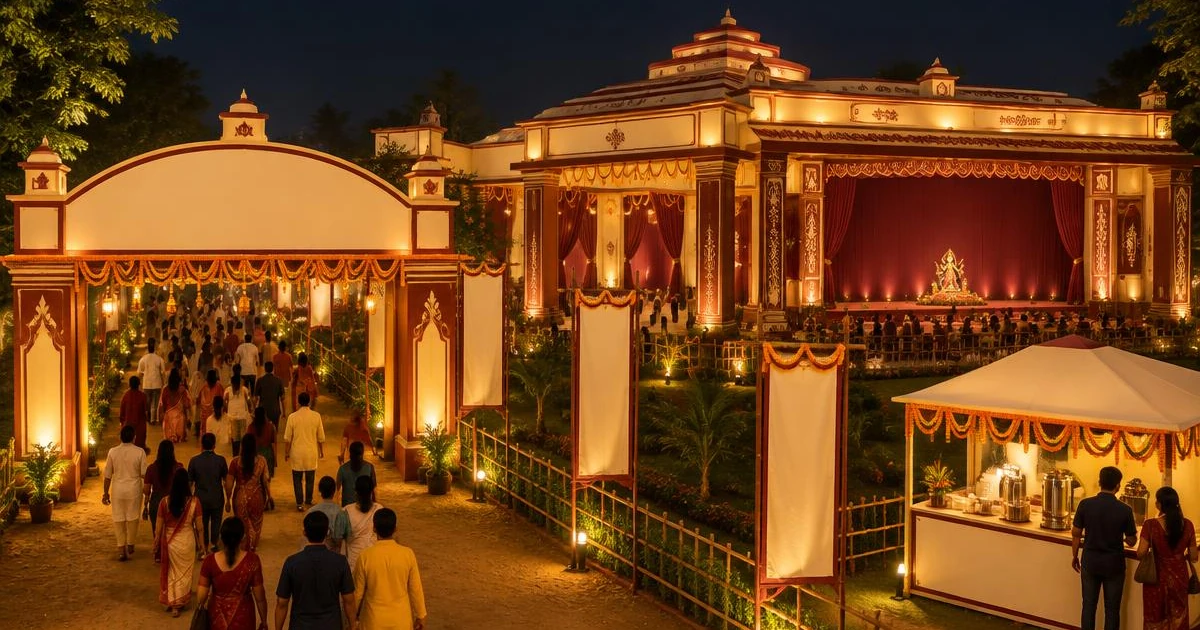
Festival Advertising for FMCG Brands: Sampling, Scale and the Kirana Connection
FMCG is the one category that can put product in a consumer's hand at a pandal. Most brands buy a banner instead — and skip the retailer link that makes the whole thing convert.
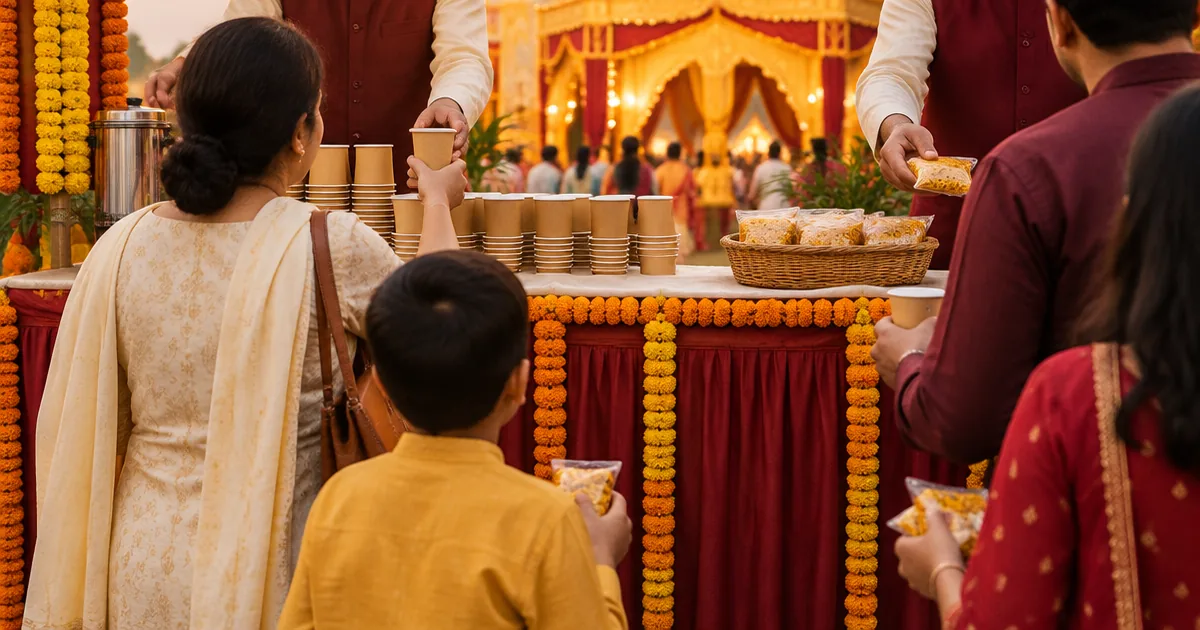
FMCG has an advantage at a festival that no other category has, and most brands do not use it.
A jeweller can show a picture of a necklace. A bank can explain a loan. An FMCG brand can put the actual product into a hundred thousand hands over four days, at a moment when people are receptive, together, and immediately able to buy more of it three streets away.
Sampling at scale, with retail distribution already in place, is close to the ideal on-ground scenario. Yet the typical FMCG festival buy is a banner and a stage backdrop.
This is how to use the format properly.
Why the festival window matters for FMCG specifically
Consumption genuinely spikes. Sweets, snacks, beverages, cooking oil, ghee, dry fruits, atta, spices, personal care, home care, detergents — festival household purchasing rises across nearly the whole basket, and the gifting categories rise sharply.
Households buy larger packs. Guests are coming. Pack-size upgrading happens naturally in this window in a way that is very hard to engineer at any other time.
Trial resistance drops. People are cooking special food, entertaining, and willing to try something new in a way they are not in an ordinary week.
Kirana stock levels are at their annual peak. Which is the part that makes everything else work — a consumer who tries your product at the pandal can buy it that evening, at the shop on the corner, where it is already on the shelf.
That last point is the difference between sampling that builds a habit and sampling that builds nothing.
The kirana link is the whole strategy
Never buy pandal inventory in an area where your distribution is weak.
This is the most expensive FMCG mistake in festival advertising, and it is made constantly. A brand samples enthusiastically in a neighbourhood, generates real trial and genuine intent, and the consumer walks into the local shop that evening and finds a competitor's product instead.
You have just paid to advertise your category to your competitor's benefit.
The correct sequence:
- Confirm distribution first. Which pandals sit inside catchments where your product is reliably on shelf?
- Brief the retailers. Tell the kiranas around each venue that sampling is happening, on which dates, and make sure stock is loaded ahead of it.
- Then buy the pandal.
Do this, and the whole activity changes character. You are not buying impressions — you are driving trial into a specific set of outlets whose secondary sales you can actually measure in the following fortnight.
Many brands find the retailer conversation itself is worth the exercise. A kirana owner told that a national brand is sampling at his neighbourhood Puja pays attention, stocks deeper, and gives you shelf position he would not otherwise have given.
What to buy
Sampling stall — the primary buy
Typical range: ₹2,000 to ₹1,50,000 depending on venue and position.
For FMCG this is not one option among several. It is the format.
Practical guidance:
Position near the exit or the food area, not the entrance. People arriving are focused on getting in. People leaving, or eating, will stop.
Sample sizes should be genuinely usable. A sachet that delivers one real use builds a judgement about the product. A token portion builds nothing.
Staff for throughput, not conversation. Unlike a bank or a property stall, your bottleneck is hands per minute. At a busy pandal a sampling stall can reach very large numbers if the operation is designed for flow — pre-portioned samples, a clear queue line, and enough people.
Attach a redemption mechanism. A coupon, a QR code, or a sticker redeemable at nearby kiranas. This is what converts trial into a first purchase, and it is what makes the activity measurable.
Count what you distribute. Samples out per day, per venue, is your top-line number and it should be recorded properly.
Prasad packet and entry-pass branding
Typical range: ₹2,500 to ₹1,50,000.
Underrated, and unusually well suited to FMCG. Every attendee physically holds it. For food and beverage brands the association with prasad distribution is natural rather than intrusive.
For a snack, sweet, beverage or staples brand this is often the best cost-per-contact buy at the entire venue.
Gate and perimeter branding
Gate: ₹5,000 to ₹2,00,000. Perimeter and pillars: ₹800 to ₹90,000.
Cheap, broad, and it does the job of making the sampling stall feel like part of a brand presence rather than a table.
Buy breadth here. FMCG is one of the few categories where mass reach genuinely is the objective, so more venues at smaller positions beats fewer at larger ones.
Stage backdrop and title sponsorship
Backdrop: ₹5,000 to ₹1,20,000. Title: ₹25,000 upward, into seven figures at the largest venues.
FMCG brands make natural title sponsors at large pandals — high frequency, mass audience, and the association is with a community celebration rather than a transaction.
Worth it for brands with the budget and a genuine mass-market proposition. Not worth it as a first purchase for a regional brand.
The community food distribution
Something specific to this category and frequently overlooked.
Many pujas and mandals run bhog, prasad or community meal distribution, sometimes at very large scale. Sponsoring the ingredients — oil, atta, rice, spices, sweets — is an option most committees will happily discuss and almost no brand asks about.
It costs less than a gate banner, it puts your product literally in the meal, and it is received as participation rather than advertising. For a staples or cooking-medium brand, it is hard to beat.
Creative for FMCG at a pandal
Show the pack, large. The pack is the recognition asset. At the shelf, three streets away, that is what the consumer has to find. Nothing else on the banner matters as much.
Price or pack size, if you lead with anything. "1kg ₹XXX" outperforms a brand line, particularly outside metros.
One product. A range shot is noise at ten metres.
Design for night and coloured lighting. High contrast, heavy type. Pack photography needs to survive being lit red or green — check it.
Local language, written not translated. Every audience can tell the difference, and for FMCG the local-brand feel is worth real money.
Where to buy — the tier question
FMCG is the category with the strongest case for going well beyond the metros.
Consumption growth is faster off a smaller base, competition for pandal inventory outside the metros is close to zero, and rates are a fraction of metro levels. Ninety district-town venues will out-reach two landmark metro sponsorships several times over.
But the distribution rule still governs. Buy tier-2 and tier-3 venues where your stockists are strong, not as a blanket geography play. The whole advantage of FMCG at a festival is the short path from trial to purchase, and that path only exists where the product is on shelf.
Measuring it
FMCG has better measurement available here than most categories, if you set it up in advance.
Samples distributed per venue per day. Your reach number.
Coupon or QR redemption at nearby outlets — the trial-to-purchase conversion, and the cleanest number you will get.
Secondary sales in the surrounding outlets for the fortnight after, against a comparable non-activated area. This is the closest thing to a genuine read, and it is worth setting up properly with your sales team before the season.
Retailer feedback. Ask the kiranas around each venue whether they saw movement. Imperfect, immediate, and often the first signal.
Repeat purchase over 60–90 days, where your data allows it. Trial is only worth what it converts into habit.
And read the proof photographs. Every booking returns three to seven photographs and a video of your material installed, with location. For FMCG, check specifically whether the sampling stall ended up where you were promised — an exit-adjacent position and a back-corner position produce completely different sample counts, and next year's buy depends on knowing which you got.
Match venues to your distribution: browse festivals by city, region and footfall — exact stall dimensions, position and duration on every listing.