Regional Festival Guide for National Brands: Which Festival, Which State
Festive ad spend is shifting away from Diwali. A state-by-state map of which festival actually matters where, and the cultural mistakes that cost brands credibility.
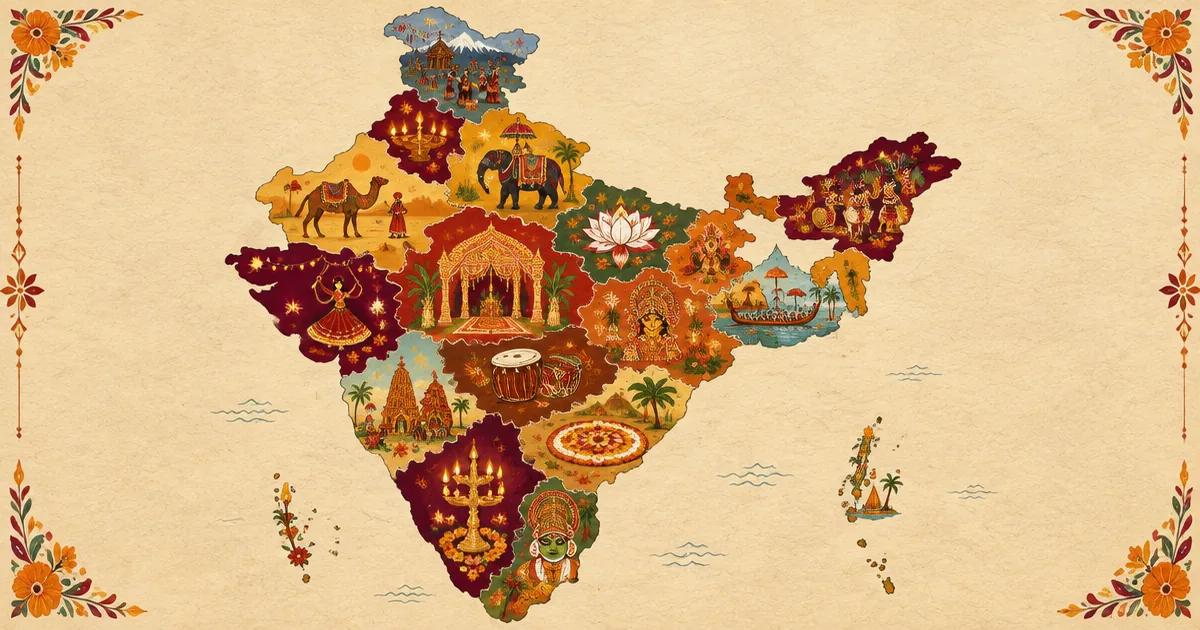
The single most expensive assumption in Indian festive marketing is that India has one festive season.
It has roughly fifteen, running from January to November, each dominant in different states, each with different formats, budgets and audiences. A brand that runs one national Diwali campaign is reaching Gujarat during Navratri, Bengal during Durga Puja and Kerala during Onam — with creative built for none of them.
The spending data confirms the shift: 51% of festive marketing activity now happens outside Diwali. Diwali still commands roughly 49%, but Navratri, Durga Puja and Dussehra together account for around 31%, and Ganesh Chaturthi another 11%. Meanwhile India's festive advertising market is heading toward ₹55,000 crore, with consumer brands raising festive spends by up to 20% year on year.
The money is growing and dispersing at the same time. Here is where it should go.
The state-by-state map
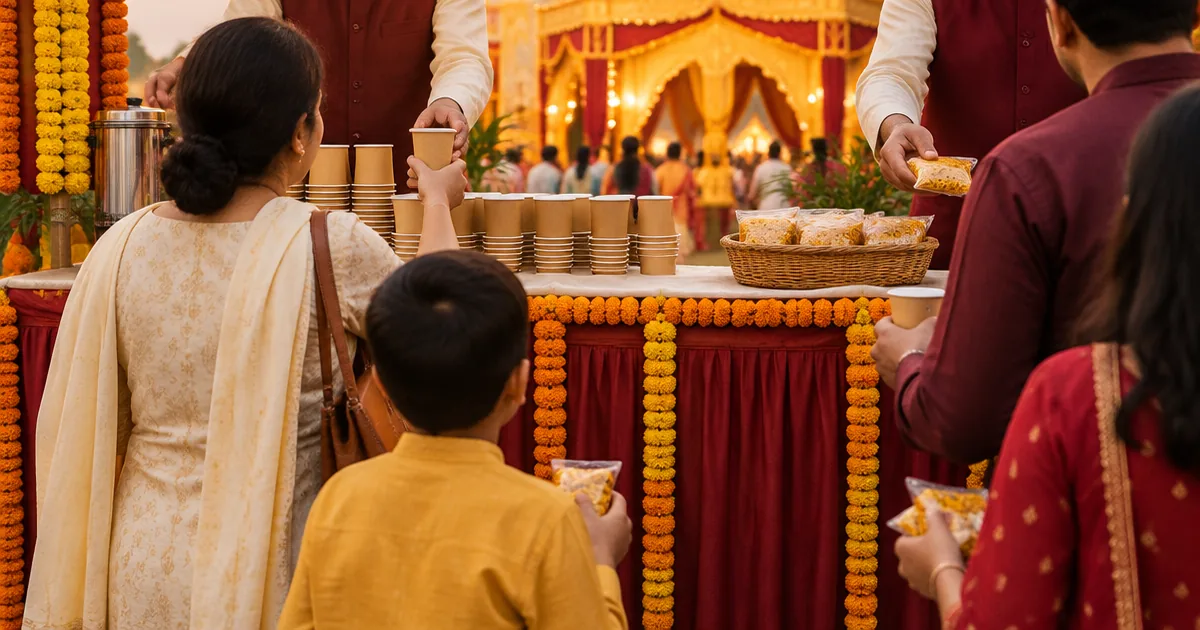
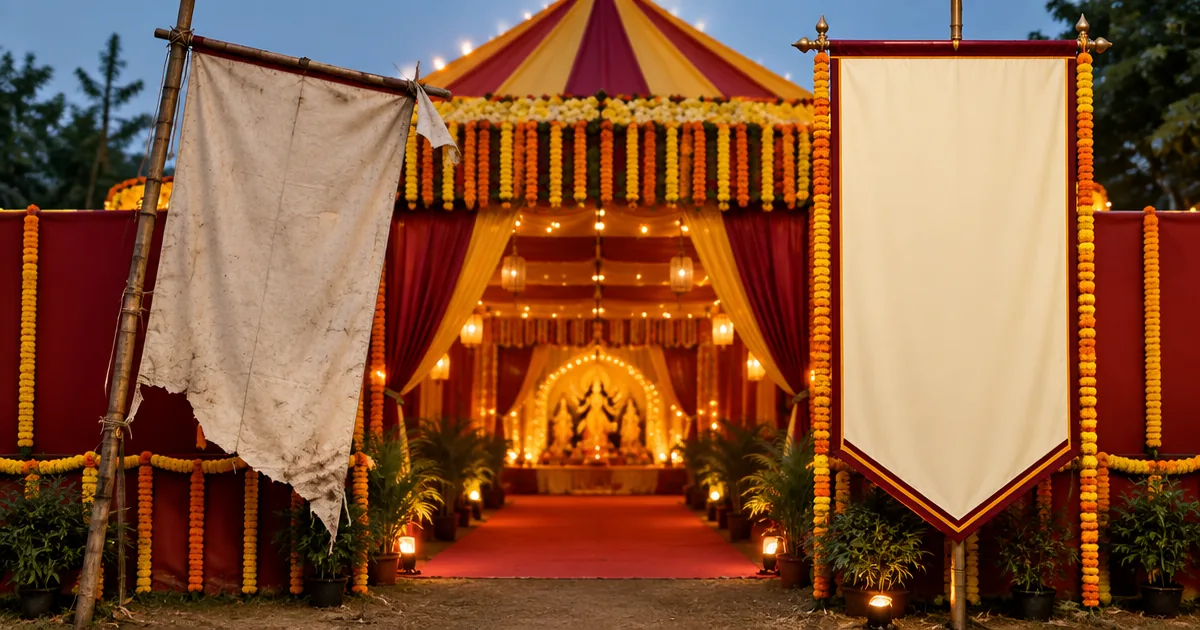
West Bengal, Assam, Tripura, Jharkhand, Odisha → Durga Puja The single largest on-ground sponsorship market in India. Bengal's Durga Puja economy is estimated at around ₹65,000 crore; Kolkata alone had 248 registered pandals in 2025. Formats: gate branding, stage backdrops, stalls, prasad packets. Book June–August.
Maharashtra, Goa → Ganesh Chaturthi Second-largest, and structurally attractive because it runs eleven days plus a visarjan procession through public streets. Formats: mandap branding, procession vehicles, stalls. Book May–July.
Gujarat, Rajasthan → Navratri and Garba Nine ticketed nights, young urban audience, heavy social sharing. The only major festival where attendance is often verified rather than estimated. Formats: title sponsorship, photo booths, ground perimeter. Book June–August.
Delhi NCR, UP, MP, Punjab, Haryana → Dussehra and Ramlila, then Diwali Ramlila grounds draw very large single-evening crowds; Diwali is retail-led rather than venue-led. Formats: Ramlila ground branding, market association tie-ups. Book July–August.
Bihar, Jharkhand, eastern UP → Chhath Puja Enormous, highly concentrated riverbank and ghat gatherings. Underserved by advertisers relative to its scale. Book August–September.
Kerala → Onam Ten days, strongly retail-linked, with boat races and community sadyas. A distinct market that national Diwali plans completely miss. Book June–July.
Tamil Nadu → Pongal, Karthigai Deepam, temple festivals Pongal is a mid-January solar festival, so unlike most others its date is stable. Temple festivals (including Thrissur Pooram in neighbouring Kerala) carry huge local significance. Book November–December.
Karnataka, Andhra Pradesh, Telangana → Ugadi, Bonalu, Bathukamma, Brahmotsavam Regional new year plus distinct local festivals with strong participation. Frequently ignored by national planners. Book two to three months ahead of each.
Pan-India retail moments → Diwali, Holi, Raksha Bandhan These work as national campaigns because the occasion is broadly shared, even where the local expression differs.
Where brands get it wrong culturally
These mistakes are common, avoidable, and genuinely damaging:
Assuming Kali Puja is Diwali. In Bengal, Assam, Odisha and Tripura, the Amavasya night of Kartik is Kali Puja. Elsewhere in India that same night is Diwali. A "Diwali" campaign with lamps and Lakshmi imagery does not speak to a Kali Puja audience — and a brand that knows the difference stands out immediately.
Running Ganesh Chaturthi creative in Kolkata, or Durga Puja creative in Ahmedabad. Misallocation that signals you do not know your own market.
Treating Onam as a Diwali variant. It is a distinct harvest festival with its own imagery, food and traditions.
Using the wrong language. Bengali for Bengal, Marathi for Maharashtra, Gujarati for Gujarat. Translated Hindi creative reads as an afterthought.
Getting the greeting wrong. "Subho Bijoya" is not interchangeable with "Happy Dussehra." Small details signal whether you actually know the audience.
Ignoring regional new years. Poila Boishakh, Ugadi, Vishu and Gudi Padwa are significant retail moments that most national calendars skip entirely.
Deity imagery used carelessly. Religious iconography in advertising carries real risk. When in doubt, use the festival's visual language — lights, colours, decoration — rather than depicting deities.
How to allocate across regions
A workable structure for a national brand:
- Identify your top five revenue states. Allocate to their dominant festival, not to Diwali by default.
- Split roughly 60/40 between the local festival and Diwali in states where a distinct regional festival dominates.
- Localise creative properly — language, greeting, imagery. Do not just translate.
- Go deep rather than wide within a state. Ten neighbourhood venues in your priority catchments generally outperform one famous venue.
- Sequence your calendar. Ganesh Chaturthi comes before Navratri and Durga Puja, which come before Diwali. Budget accordingly, and book in that order.
Frequently asked questions
Should we abandon Diwali?
No. Diwali still accounts for around 49% of festive marketing activity and works as a genuine national moment. The argument is against Diwali being your only festive line.
Which regional festival gives the best return?
For on-ground sponsorship, Durga Puja and Ganesh Chaturthi have the deepest inventory. But the honest answer is: whichever one dominates in the states where you actually sell.
How much extra does localisation cost?
Language versions and region-specific creative add production cost, but usually far less than the waste from running irrelevant national creative in a state celebrating something else.
Can a national brand sponsor hundreds of local venues?
Yes, as a cluster buy — many neighbourhood venues across your priority cities rather than a few famous ones. Reach comes from spread.
When should the whole year be planned?
Lock the annual festive plan by March–April. Booking begins in May for Ganesh Chaturthi and June for Durga Puja and Navratri.
Find festivals by state, in one place
**Browse festivals by region, city and budget** — filter by festival type and location, see published prices and past-year photographs, and book directly.
Related: [India Festival Marketing Calendar 2027](/blog/india-festival-marketing-calendar-2027) · [Durga Puja Advertising Cost Guide](/blog/durga-puja-advertising-cost-guide-brands) · [How to Measure Festival Sponsorship ROI](/blog/how-to-measure-festival-sponsorship-roi)
Spend figures are drawn from publicly reported market data; festival dominance by state reflects general practice and varies locally.