The NRI Marketing Calendar: When Diaspora Communities Actually Gather
A planning calendar for brands targeting Indians abroad — which festivals draw crowds in which countries, when to book, and why the weekend shift changes everything.
Most marketing calendars for the Indian diaspora are just Indian festival calendars with the word "NRI" added.
They are wrong in three ways that matter, and all three will cost you money if you plan around them.
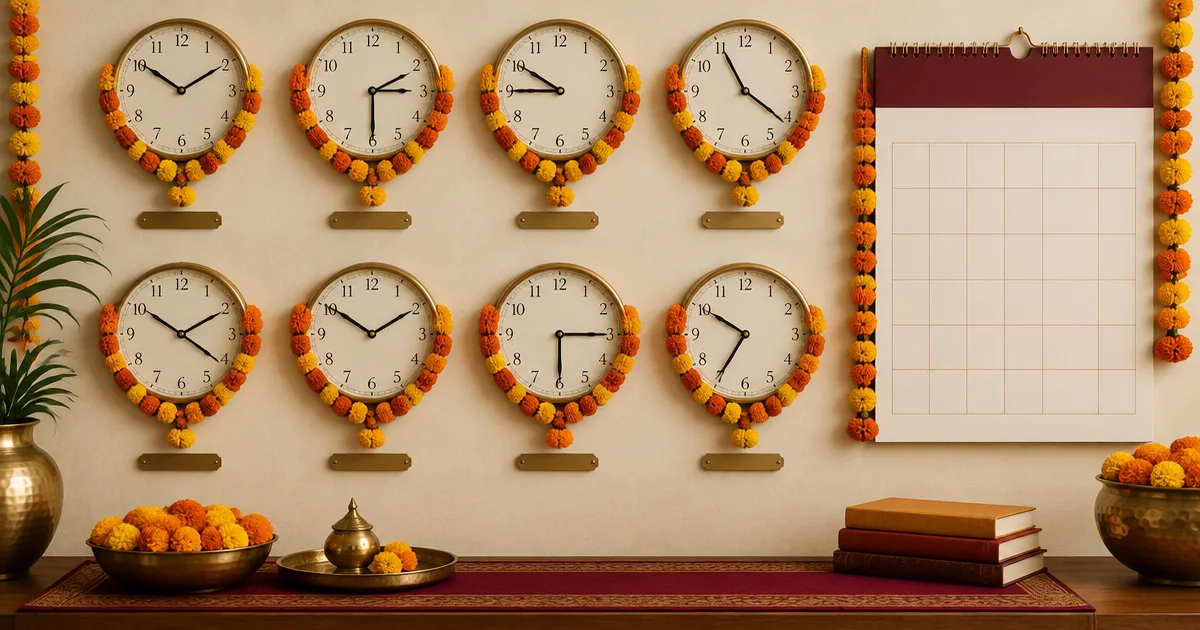
Wrong one: the dates move. Overseas committees hold the celebration on the nearest weekend, not the actual tithi. Plan for Ashtami and you will find the hall empty on a Tuesday.
Wrong two: the festivals differ by country. Diwali is the anchor in Trinidad and Fiji. Durga Puja is the anchor in Britain and Canada. Dashain is the anchor in Nepal. Thaipusam is enormous in Malaysia and Mauritius. Treating "the Indian festival calendar" as one thing produces a plan that fits nowhere.
Wrong three: it tells you when the festival is, not when to buy. By the time the festival appears on your calendar, the printing is done and the inventory is gone.
This is a planning calendar instead.
Rule one: book three months out
The single most useful number in this article.
| When | What is happening at the committee | |---|---| | Five to six months before | Venue booked, budget drafted, sponsorship targets set | | Three to four months before | Sponsors approached, rates set, deposits paid | | Two months before | Artwork collected, print orders placed | | One month before | Programme booklet goes to print — the last hard deadline | | Two weeks before | Installation planning | | Festival | Too late for anything printed |
Prime inventory — title sponsorship, gate, stage backdrop — is gone three to four months out. Not because it sells fast, but because committees confirm it early to fund their deposits.
If you are reading this in the same month as the festival, you can still buy stalls, stage mentions and sometimes banners. You cannot buy the backdrop.
Rule two: the weekend shift
In India, Durga Puja runs Shashthi to Dashami on whatever days those fall.
Outside India, almost every committee shifts to the nearest weekend, because people have jobs. Many compress five days into two or three.
Three consequences for a media plan:
Attendance concentrates. All the footfall lands on Saturday and Sunday. Daily footfall at an overseas Puja is often higher than at an Indian one of similar total size.
Different committees pick different weekends. In one country you may find Pujas running across three consecutive weekends. This is a gift — you can cover several events in a season without clashing, which is impossible in Kolkata where everything happens at once.
Never assume the date. Ask the committee. It is on the listing, and it is frequently not the day you expect.
The autumn cluster — the only season that really matters
Everything of consequence happens in a few weeks between roughly late September and mid-November. The exact dates shift each year with the lunar calendar.
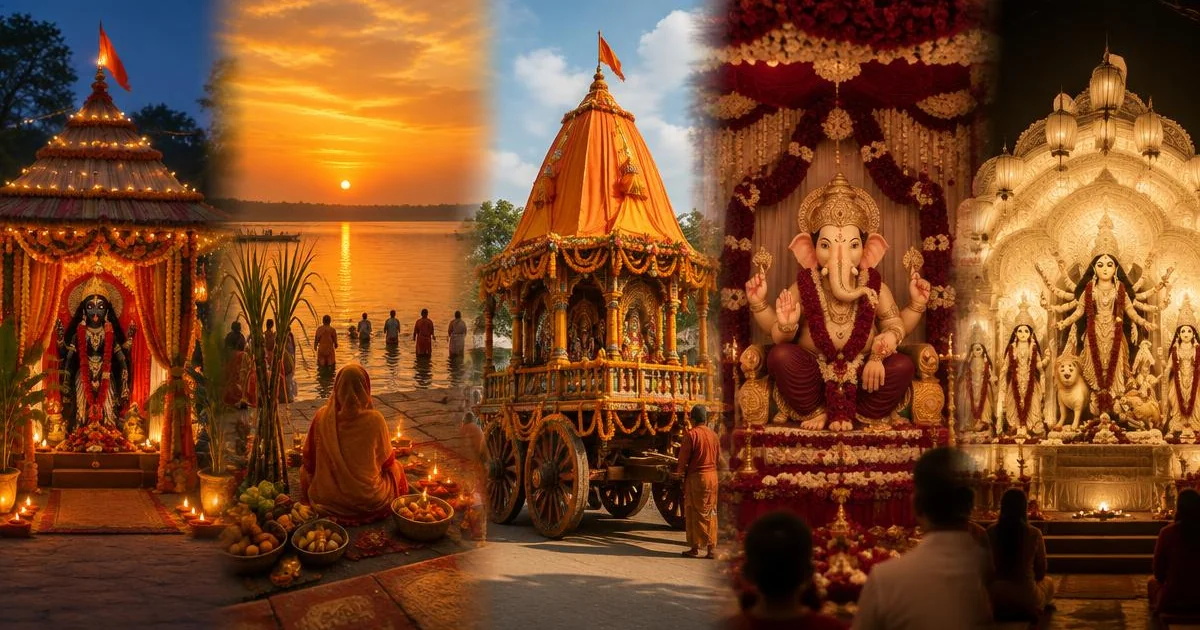
Navratri and Durga Puja
Peak in: UK, USA, Canada, Australia, New Zealand, Singapore, UAE, Bangladesh, Nepal (as Dashain), Germany, Netherlands
Nine nights of Navratri, of which the last four are Durga Puja. Gujarati communities run garba nights — often ticketed, often very large, sometimes drawing thousands per night for several consecutive nights. Bengali communities run Durga Puja.
Garba events are the most underrated inventory in the diaspora calendar. Multiple nights, ticketed entry, a young crowd, a stage, and a hall — and far fewer brands competing for the space than at a Durga Puja.
Book by: June to July.
Dashain — Nepal
The national event. Government closes, the country travels, and consumer spending peaks. Remittance inflows spike as Nepalis abroad send money home for it.
Book by: June.
Diwali and Deepavali
Peak in: everywhere, and it is a public holiday in Trinidad and Tobago, Fiji, Mauritius, Singapore, Malaysia and Nepal (as Tihar).
This is the broadest of all the occasions — celebrated across Indian regional communities rather than one, and in several countries a national event rather than a community one.
Diwali is where the older diaspora concentrates. If you are targeting Mauritius, Fiji, Trinidad or South Africa, this is your season, not Durga Puja.
Trinidad's Divali Nagar in particular runs as a multi-day festival site with stalls, nightly programmes and very large attendance — closer to a purpose-built venue than a community hall.
Book by: July to August.
Kali Puja
Follows Diwali. Strongly Bengali. Smaller than Durga Puja but with a committed audience, and often organised by the same committees — a useful add-on when negotiating a Durga Puja package.
The rest of the year
Thinner, but not empty, and much cheaper.
Winter into spring
- Thai Pongal / Makar Sankranti — significant in Tamil communities, so Sri Lanka, Malaysia, Singapore and Tamil diaspora events elsewhere
- Thaipusam — very large in Malaysia and Mauritius, and observed in Singapore and Sri Lanka. One of the largest Hindu gatherings in the world
- Maha Shivaratri — the major event in Mauritius, with an enormous multi-day pilgrimage
- Saraswati Puja — Bengali communities, family and school-centred
Spring
- Holi / Phagwa — broad appeal, strong in Trinidad and Guyana as Phagwa, and increasingly a mainstream outdoor event in UK, US and Australian cities. Young crowd, outdoor, high energy — good for FMCG, beverages and telecom
- Bengali New Year (Poila Boishakh) — Bengali communities, and a public occasion in Bangladesh
- Tamil New Year, Vaisakhi
Summer
- Rath Yatra — public processions in several diaspora cities
- Community picnics and cultural association days — not festivals as such, but well-attended, cheap, and often overlooked
Late summer
- Janmashtami, Ganesh Chaturthi — Ganesh Chaturthi is strongly Maharashtrian and growing fast in diaspora cities with large Maharashtrian populations
- Onam — the Malayali calendar's anchor, and a serious opportunity in the UAE, where the Kerala-origin population is very large. Frequently missed by brands planning around a north-Indian calendar
Matching country to occasion
| Country | Your primary occasion | Secondary | |---|---|---| | UK | Durga Puja, Diwali | Navratri garba, Holi | | USA, Canada | Durga Puja, Navratri garba, Diwali | Holi, Ganesh Chaturthi | | Australia, New Zealand | Diwali, Navratri | Durga Puja, Holi | | Singapore | Deepavali, Thaipusam | Durga Puja, Pongal | | Malaysia | Deepavali, Thaipusam | Pongal | | UAE | Diwali, Durga Puja, Onam | Navratri, Vishu | | Nepal | Dashain, Tihar | Chhath | | Bangladesh | Durga Puja | Kali Puja, Poila Boishakh | | Sri Lanka | Deepavali, Thai Pongal | temple festivals | | Mauritius | Maha Shivaratri, Divali | Thaipoosam Cavadee, Ganesh Chaturthi | | Fiji | Diwali | Holi, temple festivals | | Trinidad and Tobago | Divali | Phagwa | | South Africa | Diwali | temple festivals | | Germany, Netherlands | Durga Puja, Diwali | Holi |
A working plan for a full year
If you have budget for one season, take autumn. Nothing else comes close on total reach.
If you have budget for the year:
April–May — decide your countries, set the budget, brief creative early June — book Navratri and Durga Puja inventory while the good slots exist July — book Diwali, submit artwork for print August — confirm stalls, staff them, finalise programme-booklet pages September–November — the season runs December — review, and rebook the events that worked before anyone else does January–March — Pongal, Thaipusam, Shivaratri and Holi at a fraction of autumn rates
That last line is worth taking seriously. Spring inventory is cheap because nobody plans for it, and the audiences are real.
Plan your season: browse festivals by country, with dates, footfall and exact slot specifications on every listing.