Running a Multi-City Festival Campaign: An Operating Guide for National Brands
One brand, twelve cities, six different festivals, forty committees and one deadline. The structure that makes a national festival campaign manageable instead of chaotic.
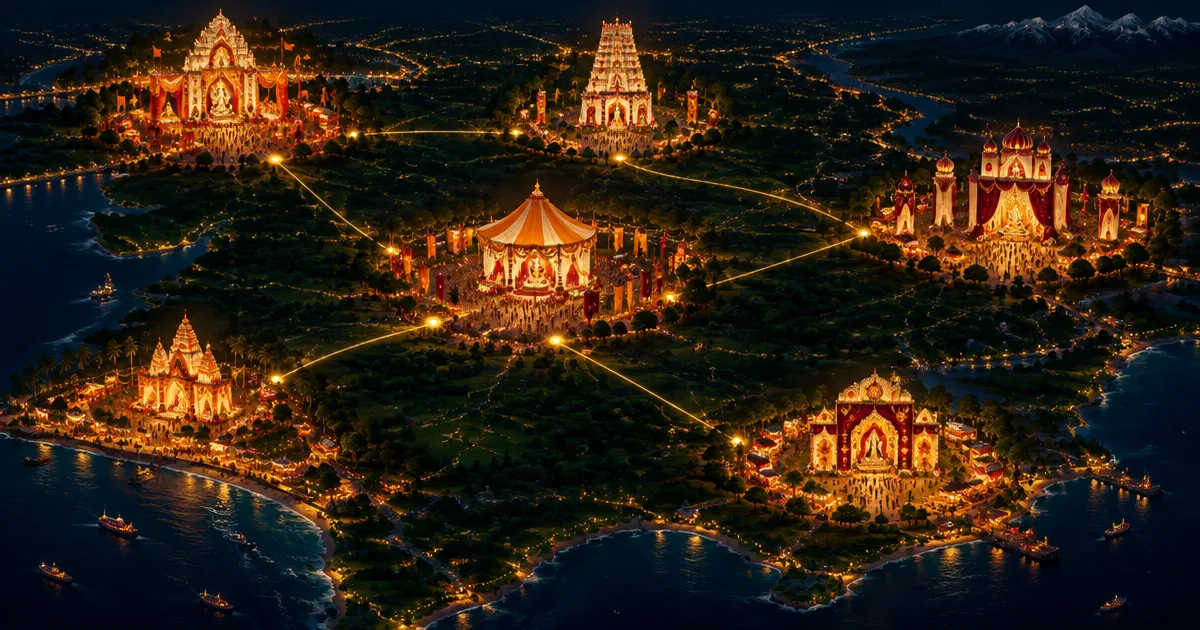
A single-city festival campaign is a marketing exercise. A twelve-city one is an operations exercise wearing a marketing costume.
The creative is the easy part. The hard part is that you are running six different festivals on different dates, in different languages, with different inventory, against forty committees who have never heard of each other, all converging on one month.
This is the structure that makes it manageable.
The five things that make it hard
Name them, because each needs a specific answer.
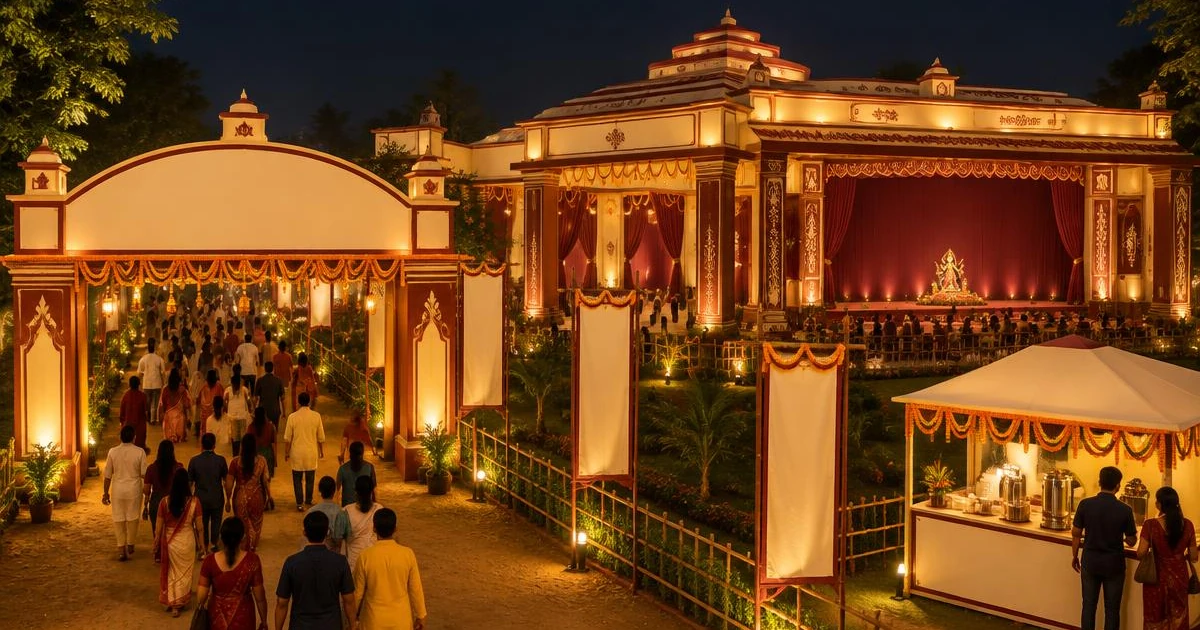
1. The festival is not the same festival. Durga Puja in Kolkata, Ganesh Chaturthi in Pune, Navratri garba in Ahmedabad, Ramlila in Delhi, Onam in Kochi, Deepavali in Chennai. Different dates, different formats, different inventory, different audiences.
2. The dates do not align. Some fall in the same fortnight, some are weeks apart. Your print schedule has to accommodate all of them.
3. Language changes by city, and translated national copy reads as translated national copy.
4. Inventory is not comparable. A Ganesh mandal sells eleven days. A Durga Puja sells four. A garba ground sells nine ticketed nights. "One gate banner per city" is not a plan.
5. Nobody from your team will visit most of the venues. Verification and proof cannot rely on someone being there.
Step 1 — Build the city-festival matrix before anything else
This is the document the whole campaign runs on. One row per city.
| City | Primary festival | Format | Duration | Language | Peak window | |---|---|---|---|---|---| | Kolkata, Howrah | Durga Puja | Pandal | 4–5 days | Bengali | Late season | | Mumbai, Pune | Ganesh Chaturthi | Mandal | 11 days | Marathi | Earlier | | Ahmedabad | Navratri garba | Ticketed ground | 9 nights | Gujarati | Mid | | Delhi NCR | Ramlila, Dussehra | Ground | Multi-day | Hindi | Mid | | Hyderabad | Ganesh Chaturthi | Mandal | Multi-day | Telugu | Earlier | | Bengaluru | Mixed — Durga Puja, Ganesh, Navratri | Mixed | Varies | Kannada + English | Spread | | Chennai | Deepavali, temple festivals | Temple, retail | Varies | Tamil | Later | | Kochi | Onam | Community | Multi-day | Malayalam | Earliest | | Guwahati | Durga Puja | Pandal | 4–5 days | Assamese | Late | | Siliguri, Durgapur, Asansol | Durga Puja, Kali Puja | Pandal | 4–5 days | Bengali | Late + follow-on |
Two things jump out of any honest version of this table.
Onam and Ganesh Chaturthi land well before Durga Puja and Diwali. If you plan a "festival season campaign" as one block, you will miss Kerala and Maharashtra entirely — their season is already over when your Durga Puja artwork goes to print.
Some cities give you eleven days for the price others charge for four. Cost per exposure-day varies enormously across your matrix, and it should influence how much you allocate to each city.
Step 2 — Split the budget by opportunity, not by city size
The instinct is to allocate proportionally to city population or existing sales. Resist it slightly.
Weight by four factors:
Distribution strength. Advertising into a city where the customer cannot easily buy is the most common waste in national campaigns. Weight toward cities where you already have dealers, branches or stockists.
Festival intensity. Kolkata during Durga Puja and Ahmedabad during Navratri are more saturated attention events than most cities manage all year. They deserve more than their population share.
Duration. Eleven days of Ganesh Chaturthi in Pune is a different asset from four days elsewhere.
Competitive density. Metro landmark venues have many competing sponsors. Smaller cities frequently have none. Your rupee buys more share of attention where nobody else is bidding.
A workable national split:
| Layer | Share | What it buys | |---|---|---| | Flagship — 2–3 landmark venues in top metros | 25% | Brand presence, press, internal credibility | | Core — gate and stage across metro catchments | 35% | Coverage where distribution is strongest | | Tier-2 and tier-3 breadth | 25% | The cheapest reach in the plan | | Activation — stalls where you have distribution | 10% | Conversion and sampling | | Reserve | 5% | In-season opportunity |
Step 3 — Structure the creative as a system, not a set of files
The most common failure in multi-city festival work is producing twelve unrelated designs, or one design translated twelve times. Both are wrong.
Build a locked master and a variable layer.
| Locked across all cities | Varies by city | |---|---| | Logo, colour, typeface, layout grid | Language of the message | | Product photography | Festival greeting appropriate to that festival | | The core proposition | Local dealer or branch name and landmark | | Legal and compliance text | Local offer, price or EMI where it differs | | Response mechanism format | The response code itself, unique per city |
Write in the language, do not translate into it. A Bengali line written by someone who thinks in Bengali reads completely differently from a Hindi line run through translation. This is the difference most brands are visibly getting wrong at pandals every year, and audiences notice immediately.
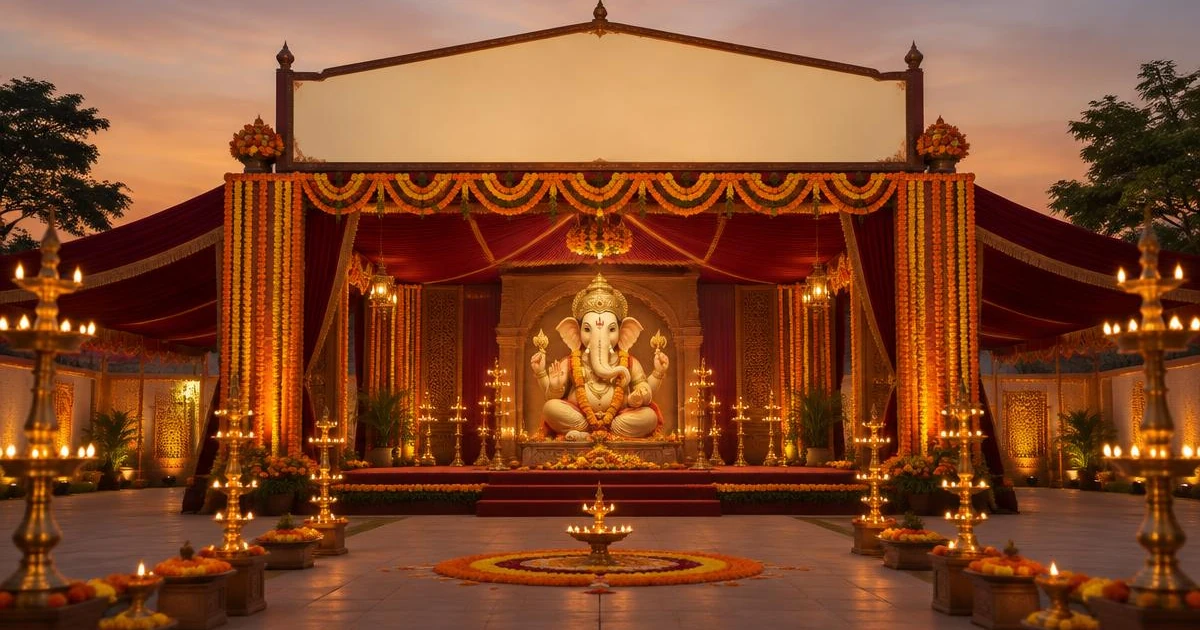
Match the greeting to the festival. A generic "Happy Festive Season" banner at a Ganesh mandal is a wasted opportunity to say Ganpati Bappa Morya. The specific greeting costs nothing and signals that you know where you are.
Produce for the worst lighting case. Across forty venues you cannot control lighting. Design so the message survives coloured pandal lighting at night from ten metres — high contrast, heavy type, no fine detail, no subtle tonal work.
Step 4 — Run one calendar, backwards from the earliest festival
Not from Diwali. From Onam, which is your earliest deadline in most national plans.
| Month | Action | |---|---| | April–May | Build the matrix. Set objective and budget. Brief creative | | May–June | Master creative locked. Kerala and Maharashtra inventory booked | | June | Anchor positions booked in all cities. Multi-festival rates negotiated | | June–July | Language versions produced and proofed by native speakers | | July | Volume inventory. Stalls. Souvenir booklet deadlines — the earliest hard cutoff | | August | All artwork despatched. Installation confirmations | | Sept–Oct | Season runs. Proof reviewed weekly. Reserve deployed | | November | Measure by city and venue | | December | Rebook winners at opening rates |
The souvenir booklet deadline is the trap. It is typically about a month before each festival and it is absolute — the book goes to print without you. Across twelve cities you will have a dozen different booklet deadlines, and they are the earliest dates in your whole schedule.
Step 5 — Solve verification once, not forty times
You cannot send someone to forty venues. So the verification has to be structural.
What you need for every venue, without exception:
- Committee verified with a committee bank account, before booking
- Exact specification — size in feet, precise position, duration
- Stated footfall, with an explanation of how it was counted
- One consistent tax invoice format carrying your GSTIN
- Proof of installation — three to seven photographs from different angles, a video, location where available
- Payment released only after proof is reviewed
Assembling that yourself across forty committees is roughly a full-time role for two months. Through a marketplace it is the default behaviour of the system: unverified committees never appear, incomplete listings are rejected before going live, funds are held until proof is approved, and every invoice comes out in the same format.
Review the proof photographs weekly, not at the end. They are the only way you will discover, while you can still act, that the gate you paid for in one city went up facing a wall.
Step 6 — Measure by city and venue, or do not bother
A single national number tells you nothing you can use next year.
One unique code, number or QR per city — ideally per venue. This is the whole measurement plan. Without it you have twelve cities of anecdote.
Compare against non-advertised comparable cities. The cleanest read available in this channel. Pick two or three similar cities you deliberately skip, and compare sales movement in the fortnight after.
Track the CPM you actually achieved per venue — slot price divided by realised footfall. Then look at the proof photographs alongside it. A venue with excellent footfall and your banner in a dead corner did not deliver its CPM, and only the photographs will tell you.
Build the venue file. City, venue, position, spend, proof, response. After two seasons this file is the most valuable asset in your festival marketing, and it is worth more than any agency recommendation.
The three mistakes that cost national brands the most
1. Treating the season as one block. Onam and Ganesh Chaturthi are over before Durga Puja artwork is printed. Plan backwards from the earliest festival in your matrix.
2. Translating instead of writing. Every audience can tell. It costs almost nothing to have a native speaker write the line instead of check it.
3. Buying the famous venue in every city. Landmark pandals draw crowds from across the metro — impressive footfall, poor concentration, maximum competition, highest price. Buy two for brand and spend the rest where your distribution actually is.
Build your matrix: browse festivals by city, region, festival type and footfall — one place, one invoice format, proof on every booking.