Festival Advertising for Jewellery Brands: A Complete Playbook
Durga Puja and Diwali are when India buys gold. Your customers are standing in a pandal for four days. Here is exactly what to buy, what it costs, and what most jewellers get wrong.
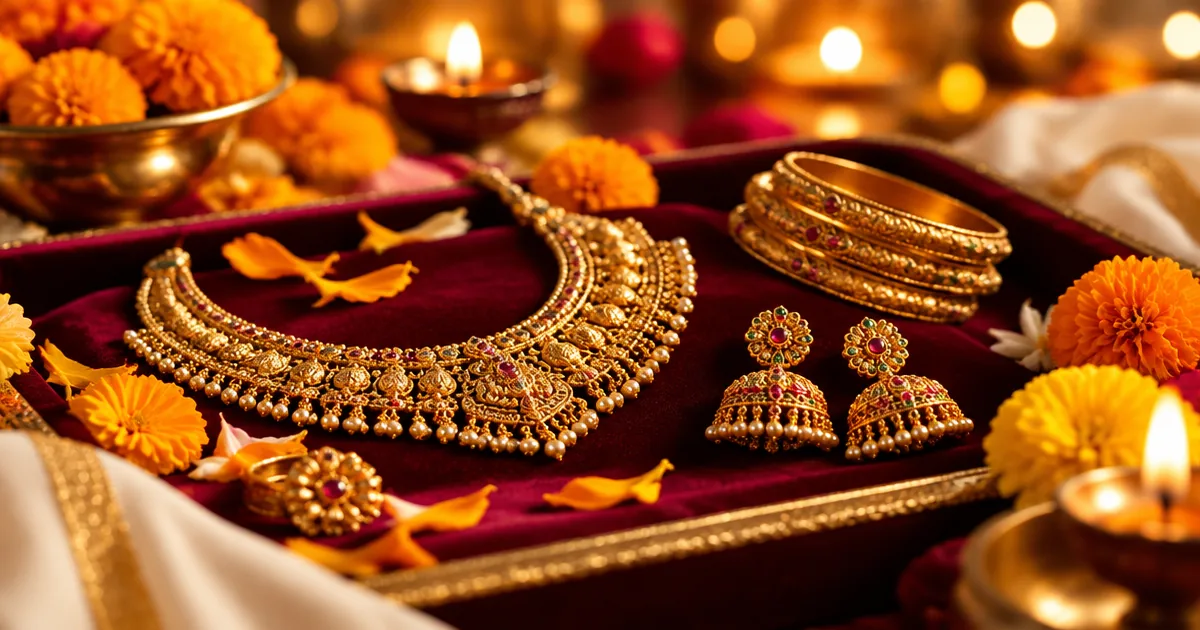
No industry has a tighter overlap between festival crowds and buying intent than jewellery.
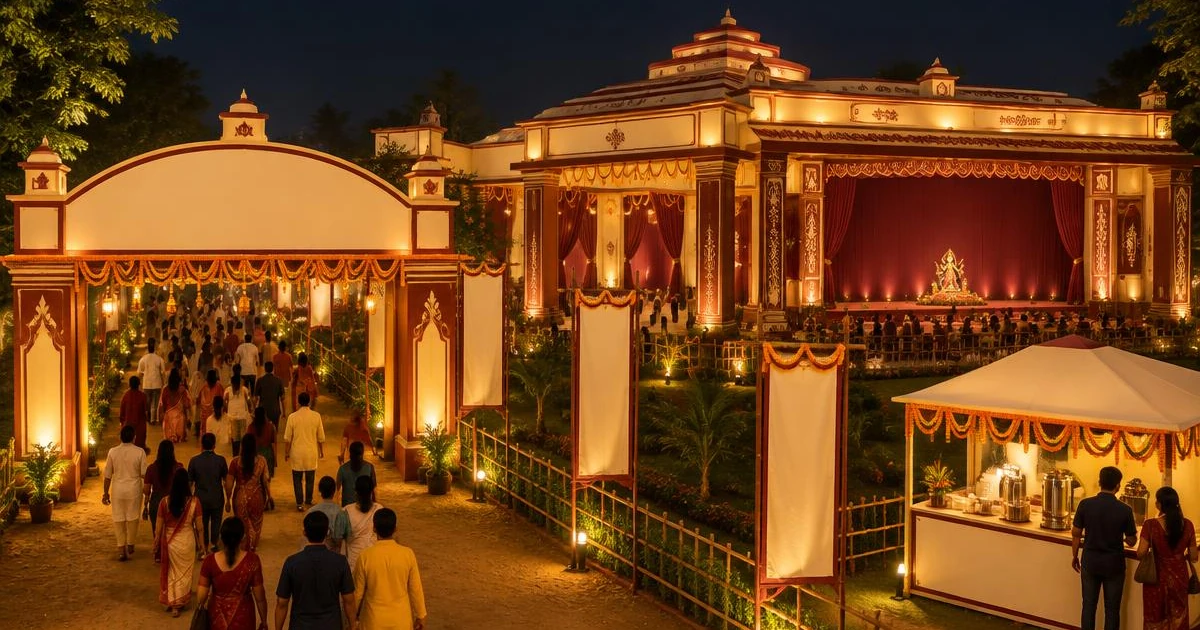
The people walking through a pandal in the first week of October are, in very large numbers, the same people who will walk into a jewellery showroom within the following three weeks. Same neighbourhood, same income bracket, same families, and a purchase they have already half-decided to make.
Most jewellers know this and still under-invest, because the alternatives are easier to buy. A newspaper jacket takes one phone call. Fifteen pandals takes fifteen.
This is the playbook for doing it properly.
Why the timing works
Indian gold buying is seasonal in a way few categories are, and the autumn cluster is the heaviest stretch of the year.
Durga Puja and Navratri start the season. New clothes, family gatherings, visits to relatives, photographs. Jewellery is worn, noticed, complimented and compared.
Dhanteras, two days before Diwali, is by tradition the single most auspicious day of the year to buy precious metal. For many showrooms it is the largest sales day of the entire calendar.
Diwali itself brings gifting, and the wedding season follows immediately behind.
So festival-week advertising is not brand-building for a purchase six months away. It is reaching someone two to three weeks before a specific, dated, culturally mandated buying occasion. That is unusually close to the point of sale for an awareness medium.
What most jewellers get wrong
Mistake 1: advertising the brand instead of the trip
A hoarding that says your name and shows a model wearing a necklace does very little. Everyone in that neighbourhood already knows your shop exists.
What moves someone is a reason to come in this week: a Dhanteras booking scheme, a making-charge offer, a new collection, an exchange rate on old gold, a gold-savings plan enrolment.
Give them the date and the reason. Not the logo.
Mistake 2: one big pandal instead of five local ones
The instinct is to buy the largest, most famous Puja in the city.
For most jewellers this is wrong. The big-name Pujas draw crowds from across the city and beyond — impressive footfall, poor concentration. A person who travelled twenty kilometres to see a famous pandal is not going to detour to your showroom.
Neighbourhood Pujas concentrate your actual catchment. The people at the para Puja three streets from your shop are the people who walk past it every day.
If you have one showroom, buy five to eight pandals within its realistic catchment. If you have a chain, buy the big ones for the brand and the local ones for the footfall.
Mistake 3: buying visibility when you needed a conversation
Jewellery above a certain price is not an impulse purchase. It involves trust, comparison, and often a family decision.
A banner cannot have that conversation. A stall can.
A well-run jewellery stall at a mid-size Puja collects genuine leads: people who want to see the new collection, ask about a gold scheme, or bring old jewellery for valuation. A staffed counter for four days at a busy pandal will out-earn a banner many times over — provided you staff it properly.
Mistake 4: skipping the souvenir book
The Puja souvenir is printed once and kept for years. It sits in homes across the neighbourhood.
It is also among the cheapest inventory available, and it is one of the few festival placements with a life beyond Dashami.
What to buy, in priority order
1. A stall, if you can staff it
The highest-value format for jewellery, without close competition. Four days of face-to-face conversation with your catchment.
Typical range: ₹2,000 to ₹1,50,000 depending on the Puja's size and position.
Only buy this if you will staff it properly. A stall with one bored junior is worse than no stall. Send someone senior who can talk about gold rates, schemes and design.
2. Gate or entrance arch
Everyone passes it. Everyone photographs it. It is the highest-visibility single placement at any pandal.
Typical range: ₹5,000 to ₹2,00,000.
3. Banners in the queue
The most underrated placement in festival advertising. People in a pushpanjali or darshan queue are stationary, bored, and reading whatever is in front of them.
A banner beside the queue gets read properly — not glanced at. If you have one message to land, put it there.
Typical range: ₹800 to ₹90,000 for flex, pillars and signage.
4. Souvenir programme
Cheap, kept, and read at leisure at home rather than in a crowd. Good for detail a banner cannot carry — scheme terms, collection photographs, showroom addresses.
5. Stage backdrop
Present in every photograph and video of the cultural programme, for the whole festival.
Typical range: ₹5,000 to ₹1,20,000.
6. Title sponsorship
For the established name with the budget. Your name alongside the Puja's on everything, announced from the stage repeatedly across four days.
Typical range: ₹25,000 upward, reaching ₹20,00,000 at the largest Pujas.
Worth it when you dominate a neighbourhood and want that association permanent. Rarely worth it as a first purchase.
What to put on the creative
Six words maximum on a banner. People read it while walking, from a distance, at night, in a crowd.
One offer, one date. "Dhanteras booking open" beats a list of three schemes.
The showroom location, large. Not the full address — the landmark. People navigate by landmarks.
A rate or a number if you have one. Making charges, exchange value, scheme instalment. Specific numbers stop people.
Design for night viewing. Pandal footfall peaks after dark under coloured lighting. High contrast, heavy weight, no thin type, no subtle tonal work. Test your artwork by looking at it from ten feet away with your eyes half closed.
Get the artwork right before printing. There is no A/B test on a printed banner.
Budget guidance
A workable structure for a single showroom in a metro neighbourhood:
| | Share | |---|---| | One stall at the busiest local Puja | ~40% | | Gate or queue banners at four to six neighbourhood Pujas | ~40% | | Souvenir pages across all of them | ~10% | | Reserve for a late opportunity | ~10% |
For a chain, add a title or gate sponsorship at one or two flagship Pujas per city on top, funded separately as brand spend.
Measuring it
Attribution at a pandal is imperfect and anyone who tells you otherwise is selling something. Measure what you can:
A unique offer code per pandal, printed on the banner. Undercounts badly, but tells you which locations pull.
A dedicated phone number or WhatsApp number on the creative.
Ask at the counter. "Where did you hear about the scheme?" Recorded consistently for three weeks, this is more useful than most digital dashboards.
Compare footfall year on year for the fortnight after the festival, against showrooms where you did not advertise.
And keep the proof. Every booking comes with three to seven photographs and a video of your advertising actually installed, with location. Useful for your own records — and for next year's planning, when you are deciding which pandals put your banner somewhere worth having.
The overseas opportunity
If you sell to NRIs, the same logic runs abroad.
Gold buying peaks around the festivals in the diaspora exactly as at home, and a Durga Puja in London or a Diwali mela in Dubai gathers several thousand affluent Indian families in one hall. Committees in the UK, USA, Canada, Australia, Singapore, Malaysia and the UAE list in their own currencies.
For an Indian jewellery house selling to the diaspora, a staffed stall at a large overseas Puja is one of the few places where those customers can be met in person, at scale, in a good mood.
Plan your season: browse festivals by city and footfall — every listing shows exact dimensions, position, duration and price.