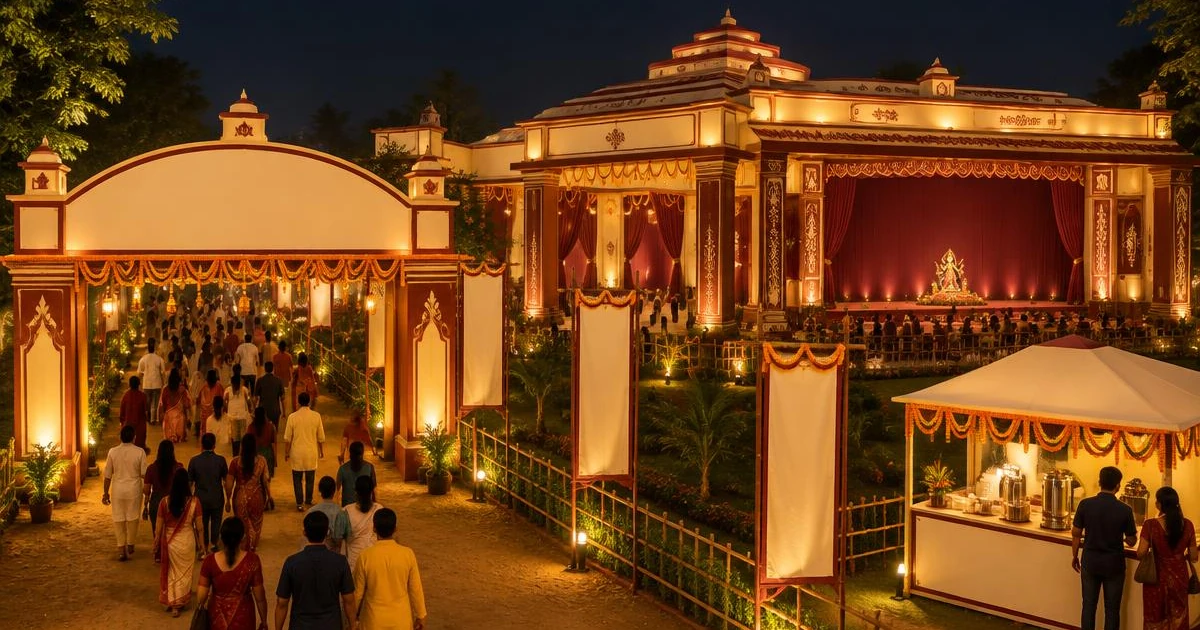
Durga Puja in the UK and Europe: A Sponsorship Guide for Brands and Committees
Britain has the oldest Durga Puja tradition outside India, and Germany and the Netherlands now host growing ones. What sponsorship looks like in these markets, what it costs, and how to buy or sell it.
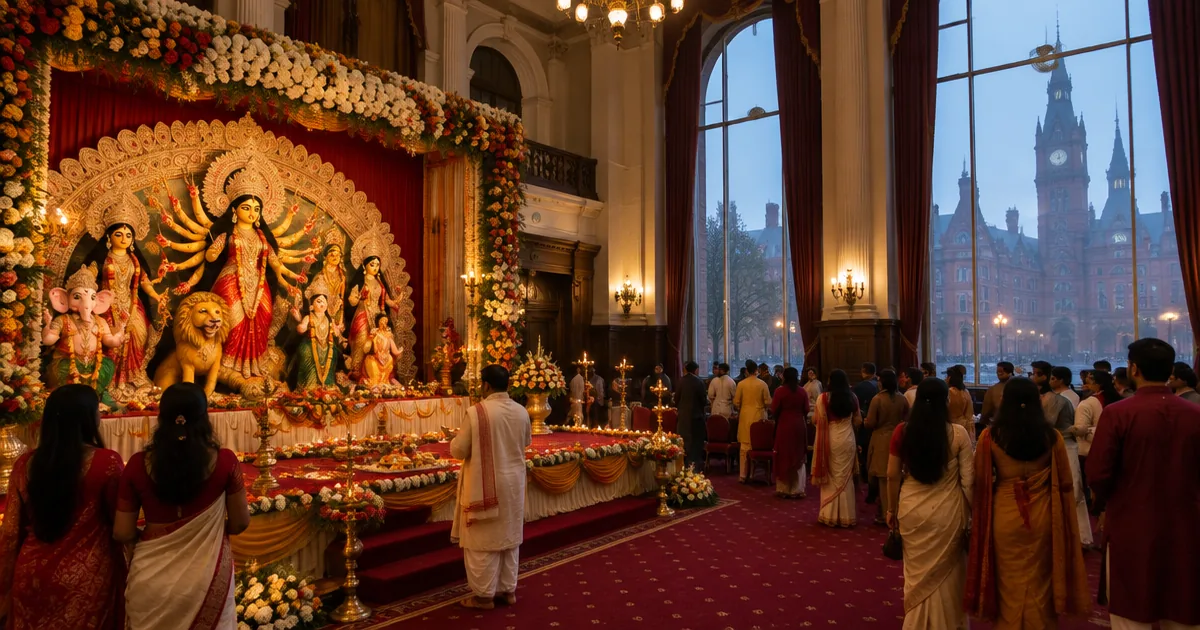
Britain has been celebrating Durga Puja for longer than any country outside India — the tradition there goes back generations, carried by successive waves of Bengali migration from Kolkata, Sylhet and Dhaka. Today the UK hosts dozens of organised Pujas, from large association events in halls holding thousands to modest community gatherings of a few hundred.
Germany and the Netherlands are newer and smaller, driven by the last fifteen years of skilled migration into engineering, IT and research. What they lack in history they make up for in a young, high-earning, concentrated audience.
This guide covers all three markets — for brands who want to advertise, and for committees who want to sell.
The UK
What the audience looks like
The British Bengali and wider British Indian population is large, established and multi-generational. That last word matters more than it sounds.
A UK Puja typically holds three generations at once: grandparents who migrated decades ago, their children who grew up British, and grandchildren who are British by birth and attending because their parents brought them.
For an advertiser, that is three distinct buying profiles in the same hall:
- First generation — property in India, retirement planning, remittance, healthcare for relatives back home, frequent travel.
- Second generation — mortgages, cars, family holidays, education for children, jewellery for weddings.
- Third generation — the audience nobody is selling to yet, and the reason the event survives another twenty years.
What UK Pujas sell
UK Pujas run in hired venues — community halls, school assembly halls, sports centres, occasionally a hired marquee. That shapes the inventory.
You are usually not buying a forty-foot pandal gate. You are buying:
- Title sponsorship — the largest line, one buyer, name on everything
- Entrance backdrop or foyer branding — the photograph everyone takes
- Stage backdrop — present in every picture of the cultural programme
- Hall banners — around the perimeter, in the food queue
- Stalls — food, clothing, jewellery, services
- Programme booklet — full page, half page, back cover
- Stage mentions — in the compere's script between items
Venue rules apply. Many hired halls restrict what can be fixed to walls, and a committee will know what their venue allows. Ask before assuming a wall wrap is possible.
Pricing
UK committees price in pounds, against UK costs. Hall hire, insurance, licensing, sound and catering are all UK-priced, and the sponsorship rates reflect that.
A committee should never convert an Indian rate. A banner slot that sells for ₹8,000 in Kolkata does not become £75 in Birmingham — that would not even cover the printing.
Price from your costs upward, then sanity-check against your footfall.
Who buys in the UK
The most active categories, in rough order of appetite:
Money transfer and remittance providers. Airlines flying the UK–India routes and travel agents specialising in them. Indian property developers running NRI sales. Jewellers, both British Asian high-street names and Indian houses selling to the diaspora. Indian grocery chains and importers. Immigration and education consultants. Solicitors and accountants serving the community. Restaurants and caterers. Insurance brokers and IFAs specialising in NRI clients.
Germany and the Netherlands
A different audience entirely
These are new migration economies. The Indian population in both countries has grown sharply on the back of skilled-worker visas — engineers, IT professionals, researchers, and increasingly their families.
The profile is younger, higher-earning, and much more likely to be in the first few years of settling:
- Recently arrived, or a few years in
- Employed in tech, engineering, pharma or academia
- Actively dealing with visas, residence permits and family reunification
- Sending money home regularly
- Renting rather than owning, but considering property — often in India rather than locally
- Travelling to India once or twice a year
For an advertiser, this is an unusually well-defined segment. Relocation services, international schooling, banking for new arrivals, tax advisory spanning two countries, remittance, airlines, and Indian grocery delivery all fit precisely.
What these Pujas look like
Smaller, often held in a rented community hall or cultural centre, frequently run by an association that also does Diwali and Holi. Attendance ranges from a couple of hundred to a couple of thousand in the larger cities.
Inventory is proportionally simpler — backdrop, banners, a handful of stalls, a programme booklet, stage mentions. Which is fine: a title sponsorship at a five-hundred-person Puja can be genuinely cheap and still put your brand in front of five hundred qualified people for a full day.
Currency
German and Dutch committees list in euros. The advertiser sees euros and pays euros. Indian GST and TCS are computed on the rupee value, with the exchange rate and the date it was published printed on the invoice.
For advertisers: how to buy across these markets
1. Decide what you actually want. Awareness at the largest event, or conversations at a smaller one? A stall at a six-hundred-person Puja may beat a banner at a three-thousand-person one if your product needs explaining.
2. Check the footfall claim. Ask how it was counted. Ticketed entry, wristbands or a door count are credible; "we think about two thousand" is a guess. Listings carry stated footfall, and honest committees will tell you how they arrived at it.
3. Buy across several, not one. Four mid-size Pujas in four cities will usually beat one large one for total reach, and it spreads the risk if one event underdelivers.
4. Book early. UK committees confirm venues and print material weeks ahead. A gate or backdrop booked in August is available; the same slot in late September is not.
5. Get your artwork right first. Print is final. Send high-resolution files in the exact dimensions the listing specifies, with adequate bleed.
For committees: how to sell properly
List with photographs. Last year's crowd, the venue, the stage. Listings with photographs get booked first — every time, in every market.
Give exact dimensions. "Banner" is not a product. "8ft × 3ft vinyl banner, left of the main entrance, in place all four days" is.
Price to cover the physical work. Printing, mounting, removal. If a banner costs you £60 to print and £200 is your price, your revenue is £140.
Complete your KYC early. No bank details, no payout — regardless of how much you have sold. This is the single most common reason committees find themselves waiting.
Verified committees with completed KYC can apply for an advance of up to 50% of confirmed bookings, subject to approval and a per-committee limit. For a committee paying a venue deposit in July for an October Puja, that timing is the whole point.
Photograph the installation. Three to seven photographs from different angles and a short video, before the payout is released. It protects you as much as the advertiser — when a sponsor asks in November whether their banner really went up, you have evidence rather than a memory.
Brands: Browse UK and European festivals and book directly.
Committees in the UK, Germany or the Netherlands: List your festival and price it in pounds or euros.